
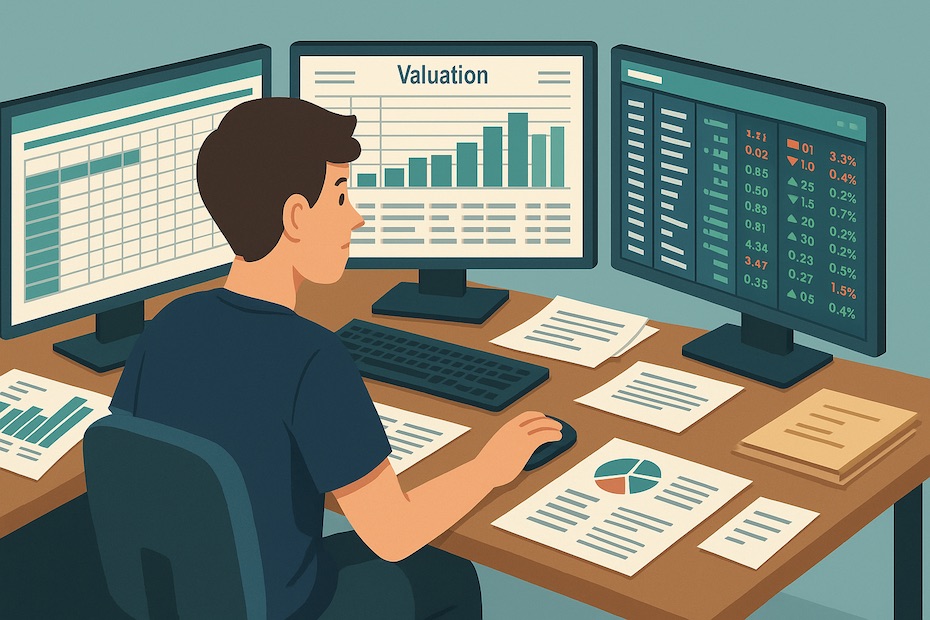
Getting early exposure to the financial world can accelerate your personal and professional clarity.
This article explains how engaging with Wall Street before college helps you define your long-term direction. From analytical discipline to mentorship access, you’ll see how this experience reshapes how you think, plan, and act before most of your peers have chosen a major.
Why does early exposure to Wall Street matter for teenagers?
It forces you to confront responsibility, structure, and high expectations before most people your age even touch them.
You won’t get that from AP Economics. Sitting at a trading desk or valuation terminal, you’re not pretending. You’re reconciling tickers, evaluating entry points, building models—and your output affects the pace of actual decisions. That level of ownership rewires your brain. You begin waking up early, preparing with urgency, documenting your mistakes, and learning in real time. That’s a level of performance most 18-year-olds don’t experience until years later.
Early exposure also reveals whether you’re aligned with the cadence of finance. Some teens discover they crave the numbers, the structure, and the logic. Others realize they prefer strategy, marketing, or tech. Either way, the time you save in career misalignment is worth more than any early salary.
What skills do you actually develop by working in finance before college?
The core development isn’t technical—it’s behavioral.
Yes, you’ll learn how to read financial statements, analyze equity reports, or use platforms like Bloomberg, Refinitiv, or Excel. But that’s just surface. What you actually sharpen is your execution muscle: showing up prepared, operating under pressure, receiving unfiltered feedback, and adapting quickly. You start thinking in cause and effect.
You’ll also develop vertical communication. You’ll brief someone older than you, with decades more experience, and you’ll be held accountable. You’ll gain internal confidence—not from loud talk, but from delivering something that matters and seeing your effort move the needle.
How do you get on Wall Street before attending college?
You need more than GPA. You need evidence that you’re worth investing in.
Start with demonstrating value. Build your own equity watchlists, create financial reports, or run simulations and publish your analysis. Pitch your work on LinkedIn or submit it to internship opportunities run by startup funds, local advisors, or peer investment collectives. Groups like Young Investors Society, Girls Who Invest, and StreetFins provide high school pathways.
Cold emails still work—if you lead with value. “I reviewed your last deal memo and built a sample DCF valuation model. I’d love to show it to you—could use your feedback.” That tone gets noticed. Your job is to prove you’re already in the mindset of an operator.
What types of roles can teens realistically handle in finance?
Focus on analytical support, market research, and internal reporting tasks.
You might help structure data pipelines in Excel, shadow investor relations calls, or support fund managers in presentation prep. In trading environments, you’ll observe order flows, document patterns, and contribute to back-testing strategies. You won’t make direct investment decisions—but if you’re sharp, you’ll influence them indirectly.
In private equity or startup investing settings, teens often help with early-stage screening: evaluating pitch decks, summarizing competitive landscapes, and building basic TAM/SAM/SOM analysis. These roles sharpen pattern recognition and strategic thinking.
How does this early work experience shape your college direction?
It filters your focus and aligns your ambition with real-world applications.
Instead of applying to schools with generic “undecided” majors, you’ll walk in knowing if you prefer finance, economics, computer science, or business. You’ll choose courses that actually connect to your goals. You’ll build relationships with professors who respect your clarity. You’ll also show up to internships as a contributor—not a consumer.
College becomes less about figuring out what you like, and more about optimizing for what works. Students with Wall Street experience enter school with momentum—and they use college to compound it, not waste it.
What mindsets should you develop before entering Wall Street?
Get clear on your internal scoreboard. You must separate validation from value creation.
Too many young people chase prestige, thinking that just being in finance is the win. That burns out fast. Instead, focus on learning velocity: how fast you close feedback loops, how often you self-reflect, and how well you track your own performance.
Write post-trade recaps. Log your blind spots. Record wins and the work that preceded them. You’re not there to impress—you’re there to understand what drives results. The more you operate like a professional, the faster you’ll earn trust—and the earlier you’ll discover if this path is right for you.
What’s the long-term upside of discovering your purpose before college?
Time compression. You’ll make 10-year decisions with 18-year-old awareness.
You won’t chase internships blindly. You won’t graduate confused. You’ll graduate with a track record—of execution, of contribution, of purpose-driven effort. When others are starting to build direction, you’ll already be refining yours.
And if you pivot, you’ll pivot with data. Not from fatigue, but from clarity. You’ll leave Wall Street because it served you, not because it defined you.
How can working on Wall Street before college shape your purpose?
- Builds real-world discipline, confidence, and accountability
- Helps clarify career interests before university
- Provides mentors and feedback to develop faster
In Conclusion
Working on Wall Street before college isn’t about getting ahead—it’s about discovering alignment. You’ll learn faster, reflect deeper, and act more intentionally. If you can handle pressure, contribute early, and reflect honestly, that experience will sharpen your purpose long before your first lecture begins.
For more insights about discovering purpose early in finance and developing real-world discipline before college, please visit my X profile.